Focus on Energy logo with the tagline "Partnering with Wisconsin Utilities"

Quit Throwing Money Down the Drain

Did you know hot water retains about 90% of its heat when it goes down the drain? Every time you shower or wash your hands, there is an opportunity to recover up to 60% of this heat, saving you energy and money.

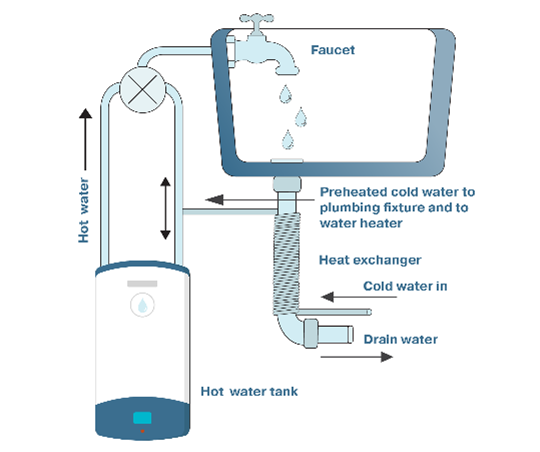
A drain-water heat recovery system captures heat from drain water and preheats the cold supply water going into your hot water tank. Your water heater will use less energy as a result.

A drain water heat recovery device consists of a copper heat exchanger and replaces a section of ordinary drainpipe. When warm water from your shower or sink drains down the copper heat exchangers, the heat from the drain water warms the pipe and heat is transferred to a copper coil that is wrapped around the outside of the drainpipe. Incoming cold water is supplied through this copper coil, preheating the cold water by this heat recovery process. The preheated incoming water is either routed to the water heater or directly to the shower or sink instead of the typical cold-water supply.

water down the drain

These systems are highly reliable and durable since they have no moving parts, are installed using standard plumbing practices, and require no on-going maintenance.

Key Features and Benefits of a Drain-Water Heat Recovery System

  • Reduces water heater energy up to 60%.
  • Increases water heater capacity and recovery time.
  • Reduces run time and noise associated with water heaters.
  • Works with all types of water heaters.
  • Works in homes and small office spaces.

Installing a Drain Water Heat Recovery System

Drain water heat recovery systems are not widely available so give yourself some time to decide which system you want (storage or non-storage) and to plan for a special order with your contractor. Costs will vary between systems with payback ranging between 2.5 and 7 years. You will also need sufficient space between the primary shower drain and before the sewage exit point.

Contact a qualified plumber to install your system. You can also consider installing it yourself but advanced plumbing experience is recommended. The cost to install will be higher in existing homes versus new construction.

Related Blogs

Champion in the Community: Pup's Irish Pub

Champion in the Community: Pup's Irish Pub

A beloved pub in New London gets a refresh that saves energy and keeps the lights on for late night sand volleyball.
Read More
Office ceiling with suspended grid tiles, fluorescent light panels, and a square HVAC vent; windows along the wall show trees and parked cars outside.

Growing a Stronger Community

Thousands of local youth are charting brighter futures thanks to the quality care at Badgerland After School Enrichment Program (BASE) Fort Atkinson. For two decades, the nonprofit has provided supportive programs to kids after school and during summers.
Read More
Residential roof with multiple dark blue solar panels mounted on shingles under a clear sky.

Save with Increased Solar Rebates

Installing solar panels at your home is a smart investment that can pay off in many ways, including increased energy savings and home value.
Read More
Book icon Join our newsletter to stay up-to-date.
Which type of news would you like?*
Question mark icon Need answers? Try our Help Center. Help Center
Question mark icon Looking for something specific?
© 2026 Focus on Energy